

Brand Lust

When McDonald’s Became a Brand People Lusted After: The Story of Speed, Dreams, and Desire
Before McDonald’s became a global giant with 38,000+ outlets, it began as a small restaurant in San Bernardino, California, in 1940. Richard and Maurice McDonald weren’t trying to build an empire. They were simply trying to answer one question: How can good food reach people faster than ever before?
What they created next would change how the world thinks about eating.
The birth of desire: Speed that felt like magic
In a world where restaurant orders took 20 minutes or more, the McDonald brothers built the Speedee Service System.
Suddenly:
burgers arrived in under one minute
fries were hot, crispy, and identical every time
service felt predictable, modern, and exciting
They focused on a limited menu:
burgers
fries
shakes
beverages
Instead of doing everything, they did a few things perfectly. And that precision created something powerful:
Reliability + Speed + Taste = Craving or Arousal (The first construct of F.A.ST model)

For post-war America, eating fast food wasn’t ordinary — it was the future on a tray. People didn’t just want to eat at McDonald’s…
They wanted to be seen (Fantasy) at McDonald’s (The second construct of the F.A.ST model)
That’s when desire turned into brand lust
Then came the third construct of the F.A.ST model “Scarcity”: As McDonald’s spread, the Golden Arches themselves became part of modern culture. The same burger tasted the same everywhere — but you couldn’t get it everywhere, at least not yet. That combination of consistency and limited availability made the craving stronger. In the 1970s, Happy Meal toys and movie tie-ins added another layer of urgency: if you didn’t go now, the toy would be gone. Kids begged, parents gave in, and the ritual of visiting McDonald’s became something families talked about and photographed. Going there meant belonging to a modern, urban lifestyle; not having one in your town meant being left out of the experience everyone else was talking about. Without ever saying it outright, McDonald’s created FOMO — making people feel they would miss out on something new, fast, and exciting if they didn’t walk under those glowing arches.
Enter Ray Kroc: Scaling desire
The brothers had invented fast food. Ray Kroc would turn it into a movement. He believed in one big idea: A burger in Alaska should taste exactly like a burger in Alabama.In 1961, Kroc purchased the company and began expanding McDonald’s restaurants across the country. The arches became symbols of modern America — neon, optimistic, efficient.
McDonald’s wasn’t selling burgers.
It was selling:
speed
progress
the promise of identical happiness anywhere you went

That’s the branding moment where McDonald’s stopped being food and started being a cultural icon (The most important aspect of being seen as a Lustful brand)
The Ideas That Built the Lusted Brand
Ray Kroc grounded McDonald’s in four timeless values:
Quality
Service
Cleanliness
Value
These weren’t slogans. They were non-negotiables.
Franchisees trained at Hamburger University not just to cook — but to protect the brand. Suppliers were chosen carefully. Ingredients were sourced locally. And employees, often mocked in pop culture, found something meaningful.
Actor James Franco, once a crew member, said: “When I needed McDonald’s, McDonald’s was there for me. When no one else was.”
It wasn’t just food. It was security, belonging, consistency, and comfort. Desire deepened.
Why people lusted for McDonald’s in the early days
Let’s be honest: McDonald’s wasn’t just eaten.It was wanted.
Here’s why:
it represented modern life
it made families feel happy and together
it gave children toys, playgrounds, and joy
taste was craveable and the same every time
marketing spoke to everyone, not just one age group
McDonald’s mastered emotional branding before the term existed.
It wasn’t “What do you want to eat?”
It became: “Are you in the mood for McDonald’s? That’s brand lust.
The branding & marketing strategies that built the empire
1.A franchising model others tried to copy: McDonald’s didn’t just expand; it engineered a blueprint for expansion that countless brands later tried to imitate. Instead of letting every outlet run differently, the company built a disciplined franchising model grounded in standard training, standard operating systems, and local menu adaptation. Franchisees were trained to run their restaurants the McDonald’s way, ensuring the same experience from one city to another. Operational systems made service fast and predictable, while localized menus allowed each region to see itself reflected in the brand. This unique combination — a global brand with a local taste — powered unstoppable growth and turned McDonald’s into the model everyone else studied.
Global brand + local taste = unstoppable growth.
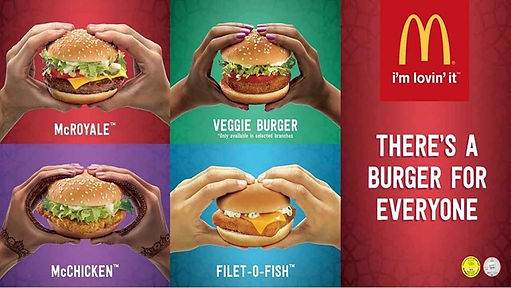
2️. Marketing to every age: From the beginning, McDonald’s understood that real scale comes not from chasing one segment, but from welcoming everyone. The brand never limited itself to a single target market. Instead, it spoke simultaneously to kids through Happy Meals and playgrounds, teenagers looking for a casual hangout, busy workers needing a quick lunch, and families seeking an affordable outing. Every part of the experience — the menu, the space, the communication, even the toys — was designed to make different age groups feel equally comfortable. Over time, this strategy shaped a powerful identity: McDonald’s is not just a restaurant, it is “the place everyone belongs.”
3️. Doubling down on the core products: At its foundation, McDonald’s success was built on remarkable simplicity. Burgers, fries, and shakes — that was the heart of the menu. The McDonald brothers realized early what great marketers still preach today: when you focus on doing a few things exceptionally well, those very items become more desirable. Instead of endlessly expanding the menu, they perfected the classics, refining taste, speed, and consistency until customers craved them. By doubling down on core products, McDonald’s turned everyday food into signature experiences people returned for again and again.
4️. Changing when the world demanded it: When the documentary “Super Size Me” exposed the risks of excessive fast-food consumption, McDonald’s did not retreat into denial. Instead, the brand listened and adapted. It introduced salads, wraps, and other lighter options, and began openly sharing nutritional information so customers could make informed choices. Rather than clinging stubbornly to the past, McDonald’s evolved with shifting consumer expectations. That willingness to change preserved its desirability — brand lust endured because McDonald’s proved it could be responsive, not resistant, to the world around it.
The real secret: McDonald’s didn’t sell food
It sold:
speed
reliability
happiness
childhood memories
American modernity
predictable comfort
cultural belonging
McDonald’s became a lusted brand because people didn’t just consume it.
They attached life moments to it.
· First dates.
· Birthday parties.
· Late-night drives.
· After-school rituals.
The arches became a landmark of emotions.
Final thought
When McDonald’s started, it wasn’t merely a restaurant —it was a symbol of a new world: fast, bright, consistent, affordable, joy-centered
That is why, from the moment it began, McDonald’s wasn’t just loved.
It was lusted after.



Super Content