

"They Sold Parenthood to Children. And Called It a Toy."
- Markasm Brandtism
- Apr 22
- 3 min read


MARKASM.IN · MARKSPASM · 7 MIN READ
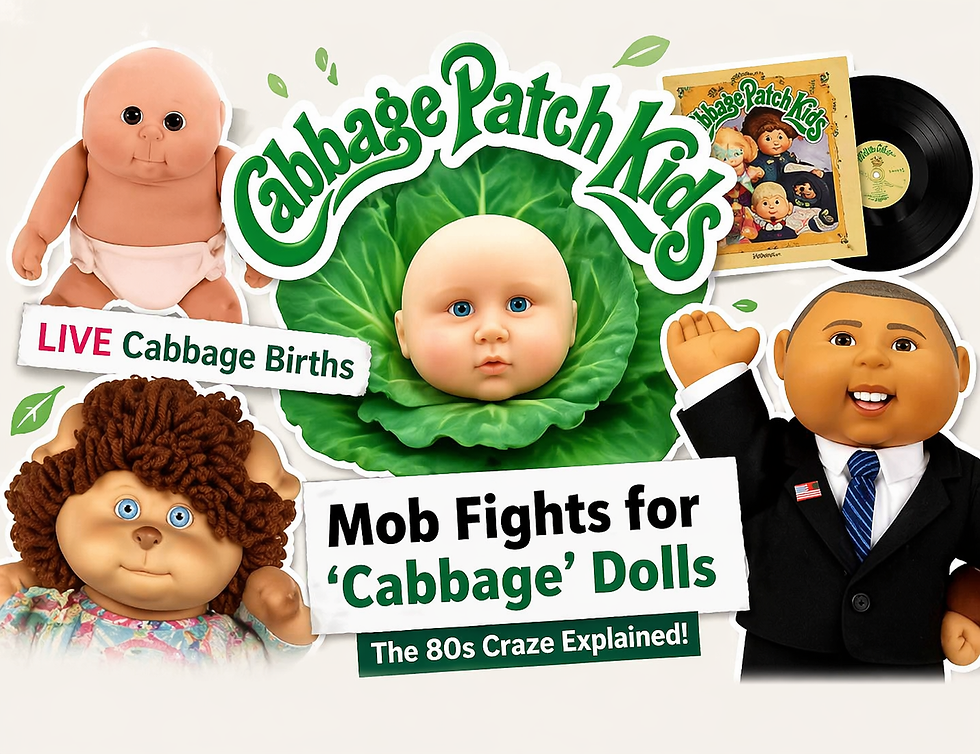
They Didn't Sell Dolls.
They Sold Parenthood.
Xavier Roberts didn't go to business school. He went to art school. And he accidentally engineered the most emotionally manipulative marketing system in toy history.
Let's start with a monkey.
Punch — an abandoned baby macaque — was given an IKEA Djungelskog plush toy. He clung to it like it was his mother. Videos went viral under #HangInTherePunch. IKEA sold out globally. 200%+ surge in sales. Zero marketing budget spent.
That was accidental emotional marketing. Now imagine if someone had done it intentionally — at scale — four decades earlier.
Meet Xavier Roberts. And the Cabbage Patch Kids — the most brilliantly disturbing marketing con of the 1980s that nobody talks about.
The Trick That Changed Everything
Roberts didn't manufacture toys. He engineered an adoption ritual. Each doll was "born" in a cabbage patch — not made in a factory. Each had a unique name, a birth certificate, and its own identity. You didn't buy one. You adopted one.
Children signed papers. They named their doll. They became "parents." And Roberts kept the connection alive with birthday cards, yearly updates, and new accessories — making the doll feel like it was genuinely growing up alongside the child.
The result? By 1983, parents were trampling each other in stores. Fighting. Competing. Paying scalper prices. For a doll that — let's be honest — wasn't even particularly pretty.
For the full story of Cabbage Patch Kids, visit the website : cabbagepatchkids.com

The 4 Psychological Pillars (That Still Work Today)
This wasn't just good marketing. It was a system — carefully engineered to hack four of the most powerful human psychological triggers:
Anthropomorphism — Give an object a name, a birthday, and a backstory — and the human brain stops seeing plastic. It sees a person. The emotional bond that forms is indistinguishable from a real relationship. Roberts weaponized this beautifully.
Emotional Branding — He never sold features. He sold feelings. The "adoption" process made every purchase feel like a deeply personal, meaningful moment — not a transaction. Care, attachment, belonging. That's what was on sale.
Narrative Transportation — The cabbage patch origin story wasn't copy. It was mythology. And people don't fact-check mythology — they inhabit it. Children didn't just buy a doll. They stepped into a living story.
Identity-Based Marketing — The most genius move of all. Children stopped being buyers. They became parents. When your product gives someone a new identity — a role, a responsibility — it stops being optional. It becomes part of who they are.

The Uncomfortable Truth Modern Marketers Won't Admit
Before you dismiss this as "just a toy story" — look around. Limited sneaker drops. NFT communities with exclusive membership. Subscription boxes designed as "curated personal experiences." The tactics evolved. The psychology hasn't moved one inch.
What happened organically with Punch and the IKEA toy was engineered systematically in Cabbage Patch Kids. One was accidental. The other was deliberate. But the outcome? Identical. Deep human connection.
The Cabbage Patch Kids didn't win because they were better dolls. They won because they meant something. They turned a simple plastic toy into an emotion, a connection, and a lifetime memory.
The MarkAsm Takeaway
Stop describing your product's features. Start architecting the emotional journey that makes people believe they need what you offer to become who they want to be.
Build narratives, not just offerings
Design experiences, not just transactions
Create personal relevance, not just awareness
In a world drowning in choices, what truly stands out is how your brand makes people feel. And when something feels personal, it stops being a product — it becomes part of their life.
Follow MarkAsm for more insights that make you see marketing everywhere.


Comments